Título :
Triglyceride-glucose index in adolescents with type 1 diabetes mellitus |
Autor :
García-Poblet, Marta
Nso-Roca, Ana Pilar
Martínez Sanz, José Miguel
Sospedra, Isabel |
Editor :
Elsevier |
Departamento:
Departamentos de la UMH::Farmacología, Pediatría y Química Orgánica |
Fecha de publicación:
2025-03 |
URI :
https://hdl.handle.net/11000/38793 |
Resumen :
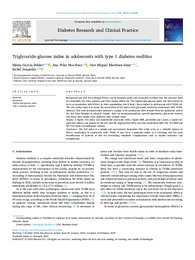
Background and Aim: Even though HbA1c can be obtained easily and accurately by blood test, the cost may limit its availability for some patients and their proper follow-up. The triglyceride-glucose index has been shown to have an association with HbA1c in other populations, but it hasn’t been studied in adolescents with T1DM yet. The aim of this study is to assess the association of TyG index with glycaemic control in adolescents with T1DM. Methods: This cross-sectional study included a sample of 36 adolescents (50% female) from the paediatric unit of the San Juan Hospital in Alicante (Spain). Data on sociodemographics, growth parameters, glycaemic control, and blood tests results were collected after routine visits. Results: A higher TyG index was statistically associated with a higher BMI, percentile and z-score, a higher triglyceride, HbA1c and glucose levels and with the triglycerides/HDL, the total cholesterol/HDL, the TyG-BMI and the TyG-waist circumference indexes. Conclusion: The TyG index is a simple and non-invasive biomarker that could serve as a valuable adjunct to HbA1c monitoring in adolescents with T1DM. It may have a potential utility as a screening tool for early identification of patients at risk for developing metabolic complications such as insulin resistance and dyslipidemia.
|
Palabras clave/Materias:
adolescent
tryglyceride-glucose index
type I diabetes mellitus |
Tipo de documento :
info:eu-repo/semantics/article |
Derechos de acceso:
info:eu-repo/semantics/openAccess
Attribution-NonCommercial-NoDerivatives 4.0 Internacional |
DOI :
10.1016/j.diabres.2025.112048 |
Publicado en:
Diabetes Res Clin Pract . 2025 Mar:221:112048 |
Aparece en las colecciones:
Artículos - Farmacología, Pediatría y Química Orgánica
|
.png)
 La licencia se describe como: Atribución-NonComercial-NoDerivada 4.0 Internacional.