Título :
The Effect of Physical Exercise on Non-Oncological Musculoskeletal Chronic Pain and Its Associated Biomarkers: Systematic Review on Randomized Controlled Trials |
Autor :
Castillo-Bellot, Israel
Peiro, Ana 
Zandonai, Thomas |
Editor :
MDPI |
Departamento:
Departamentos de la UMH::Farmacología, Pediatría y Química Orgánica |
Fecha de publicación:
2025-09-08 |
URI :
https://hdl.handle.net/11000/38886 |
Resumen :
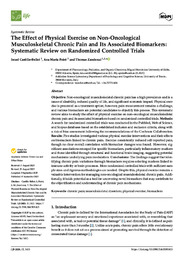
Objective: Non-oncological musculoskeletal chronic pain has a high prevalence and is a cause of disability, reduced quality of life, and significant economic impact. Physical exercise is presented as a treatment option; however, pain measurement remains a challenge, and various biomarkers are potential candidates to objectify this process. This systematic review aims to study the effect of physical exercise on non-oncological musculoskeletal chronic pain and its associated biomarkers based on randomized controlled trials. Methods: A search for randomized controlled trials was conducted in the PubMed, Web of Science, and Scopus databases based on the established inclusion and exclusion criteria, along with a risk of bias assessment following the recommendations of the Cochrane Collaboration. Results: Five studies investigated various physical exercise interventions and their effects on biomarkers linked to chronic pain. Exercise consistently reduced self-reported pain, though no clear overall correlation with biomarker changes was found. However, significant associations emerged for specific biomarkers, particularly inflammatory markers and those identified through structural and functional brain imaging, suggesting potential mechanisms underlying pain modulation. Conclusions: The findings suggest that identifying chronic pain variations through biomarkers requires selecting markers linked to immune activity or brain processes. More randomized controlled trials with sufficient sample sizes and rigorous methodologies are needed. Despite this, physical exercise remains a valuable intervention for managing non-oncological musculoskeletal chronic pain. Additionally, it holds potential as a tool for uncovering novel biomarkers that may contribute to the objectification and understanding of chronic pain mechanisms.
|
Palabras clave/Materias:
biomarkers
chronic pain
musculoskeletal disorders
physical exercise |
Tipo de documento :
info:eu-repo/semantics/article |
Derechos de acceso:
info:eu-repo/semantics/openAccess
Attribution-NonCommercial-NoDerivatives 4.0 Internacional |
DOI :
10.3390/life15091413 |
Publicado en:
Life (Basel). 2025 Sep 8;15(9):1413 |
Aparece en las colecciones:
Artículos - Farmacología, Pediatría y Química Orgánica
|
.png)
 La licencia se describe como: Atribución-NonComercial-NoDerivada 4.0 Internacional.